
For most people who live in Canada, the winter season is a time of hibernation. I know a few friends who love to socialize all summer but disappear just after Thanksgiving weekend, limiting their gatherings to hospital visits or necessary outings.
Understandably, the drastic drop in temperature—from summer to autumn and then to winter—makes it difficult to adjust to subzero weather. Despite the variations across provinces, with some places being more relentless than others, one can’t help but wonder: What does God think about our winters? Why do we have to weather the winter storms?

The Bible offers many reflections on God’s understanding of the seasons:
- Genesis 8:22— “As long as the earth remains, planting and harvest, cold and heat, summer and winter, day and night will never cease.”
- Psalm 74:17— “You set the boundaries of the earth; you made both summer and winter.”
- Job 37:5–6— “God’s voice thunders in marvellous ways; he does great things beyond our understanding. He says to the snow, ‘Fall on the earth,’ and to the rain, ‘Be a mighty downpour.’”
These scriptures remind us that God is fully aware of the seasons and the purposes they serve. Through them, we can tell and pass time, for “to everything there is a season, and a time for every purpose under heaven” (Ecclesiastes 3:1). Summer, autumn, winter, and spring are all part of God’s creation, helping us to number our days and organize our lives according to divine rhythm.
Seasons as Knowledge Systems
Seasons fuel our ecosystem and sustain the earth’s delicate balance. They regulate cycles of growth, rest, migration, and renewal, allowing both plants and living creatures to thrive according to divine order. The changing of season is more than a meteorological phenomenon—it is a divine manifestation through which creation reveals the wisdom of God.
On a spiritual level, seasons teach us rhythm, patience, and trust in divine timing. They remind us that not everything blossoms at once and that resting is as sacred as working. Just as the soil must lie still after the harvest to regain its strength, so too must we learn to embrace moments of dormancy so that we may be renewed.
Seasons, therefore, invite us to see life not as a straight line but as a continuous cycle of beginnings, endings, and renewals—each carrying its own grace. We are called to observe how nature adapts to change with quiet strength and poise. The trees shed their leaves without protest, trusting that new life will emerge in time. Rivers freeze and thaw yet never lose their essence. Birds migrate across vast distances, guided by an inner knowing placed within them by the Creator.
In each of these transitions, God whispers lessons about surrender, endurance, and hope. Just as creation adjusts its pace to the rhythm of the seasons, so too do our human activities, vocations, and daily routines follow the same divine order—each finding purpose in its appointed time.
Seasons and Human Activity
Our understanding of seasons is often shaped by the work we do. For example, a farmer sees spring as a time to prepare the land, summer for planting and nurturing, autumn for harvesting, and winter as a period of rest before the next cycle begins.
By contrast, a student might view spring as the end of the school year, summer as a break, autumn as a new beginning, and winter as the midpoint of their academic journey.
Depending on how we live, the passing of seasons can bring either joy or anxiety. When we feel pressed for time, chasing goals or missing moments of rest, time itself can feel like a reminder of failure. Each new day becomes a marker of what we haven’t achieved rather than what God has already done. This cycle of dread can sink us into despair, widening the gap between our hopes and our unfulfilled promises.
When Seasons Test Our Faith
God also acknowledges the harshness of seasonal changes. Psalm 148:8 says: “Fire and hail, snow and clouds; stormy wind, fulfilling His word.” Seasons can bring with them exhaustion, uncertainty, and pain.
When we find ourselves in a long season of ‘fire’, ‘snow’ or ‘storm,’ our faith can be tested to its limits—especially when it feels like winter has no end. Seasons are meant to signal temporal changes, yet being stagnant in a seemingly endless season while time moves forward can make it harder to appreciate the omnipresence of God.
Just as winter eventually gives way to spring, no season—no matter how difficult—lasts forever. In our winters of infertility, illness, financial struggle, or heartbreak, God is still working beneath the surface. God is not silent in our suffering; He is speaking through it.
The winter season, both literal and metaphorical, is not a punishment—it is a pause, a preparation, a moment of pruning. The soil may look frozen, but life is quietly being prepared for renewal.
Living Beyond the Seasons
Ever wondered why God asks us to forget the things of the past, and in the same breath, calls us not to worry about tomorrow? This is not incidental—it is intentional counsel designed to guard our minds against the constant self-critiquing that feeds our anxieties about the present moment and the uncertain future.
Life is full of uncertainties, and God invites us to live in harmony with ourselves, knowing that there is nothing within our power that can create or change what He has already ordained.
Isaiah 55:10–11 reminds us: “The rain and snow come down from the heavens and do not return without watering the earth. They make it bud and flourish, giving seed to the sower and bread to the eater. So is my word that goes out from my mouth: it will not return to me empty but will accomplish what I desire and achieve the purpose for which I sent it.”
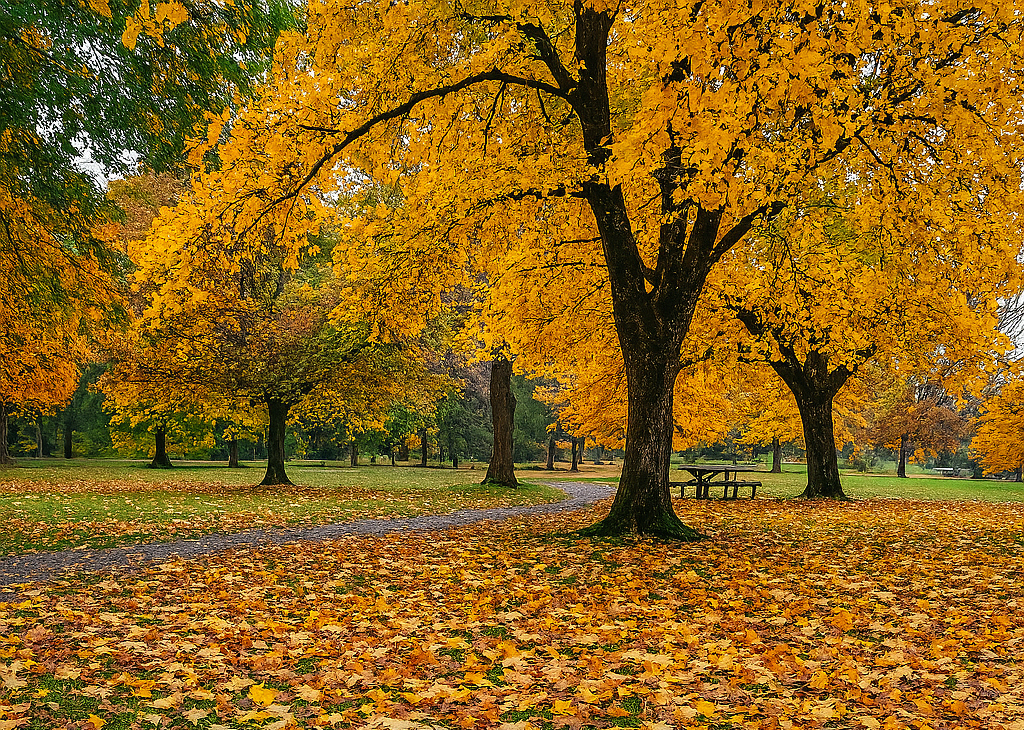
Clearly, God understands both weather and seasons. There is no confusion in the changes that accompany seasonal transitions. Instead, weather patterns help us understand the transformations happening in our environment—shedding of leaves, blooming of flowers, yellowing of trees, and the expansive rejuvenation of vegetation all signal the life of the biosphere. Even the thunderstorm and the gusty winter wind are part of God’s orchestration, reminding us that transformation is always taking place, even when it’s unseen.
Weathering the Cold in God’s Embrace
Proverbs 25:13 says: “Like the coolness of snow at harvest time is a trustworthy messenger to those who send him; he refreshes the spirit of his masters.”
In this verse, snow is not a symbol of hardship but of refreshment and renewal. Similarly, winter invites us to pause, rest, and draw closer to God’s warmth. The stillness of the season gives space for reflection and inner restoration.
To “winter with God” is to learn to rest in His embrace even when life feels cold and uncertain. It is to trust that every flake of snow, every silent night, and every delayed bloom holds purpose in God’s grand design. Seasons, therefore, are knowledge systems—repositories of divine intelligence that help us interpret human existence and our relationship with creation. Through them, we come to understand that struggle, rest, joy, and sorrow are not random occurrences but purposeful stages of our growth and renewal.
To live seasonally is to live attentively—to notice how the external world mirrors our inner transformations. There are seasons to plant dreams and seasons to prune distractions; seasons to celebrate abundance and seasons to sit quietly in waiting. Recognizing this divine order frees us from the illusion of control and grounds us in trust: that God’s timing is always perfect, and that even in our winters, life is quietly unfolding beneath the surface.